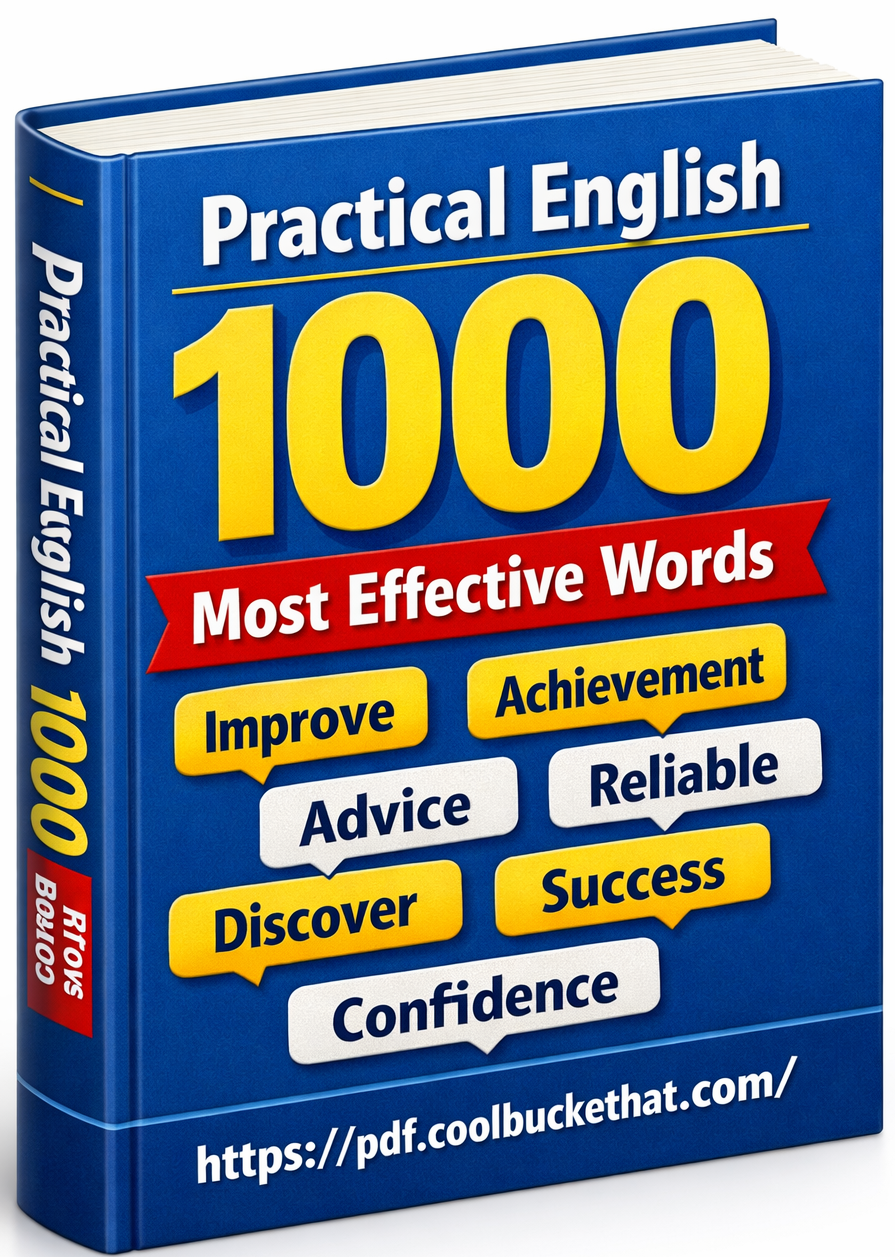
Practical English 1000 Most Effective Words
Practical English 1000 Most Effective Words: Learn What Really Matters
Practical English 1000 Most Effective Words is a focused and results-driven approach to learning English efficiently. Instead of trying to memorize thousands of rare or academic words, this method concentrates on the words that are actually used in daily conversations, reading, writing, and work situations. By mastering the most effective and frequently used English words, learners can understand and communicate much faster with less effort. This article explains why this approach works, who it helps, and how to use it effectively.
Why Focus on the Most Effective English Words
English has hundreds of thousands of words, but native speakers use only a small percentage in daily life. Research shows that a limited group of high-frequency words appears again and again in spoken and written English.
Learning the most effective 1000 words allows learners to:
- understand most everyday conversations
- read basic texts with confidence
- express ideas clearly and simply
- avoid feeling overwhelmed
This practical focus saves time and increases motivation.
What “Most Effective Words” Really Means
The most effective words are not just common; they are useful across many situations. These words appear in:
- daily conversations
- news and media
- workplace communication
- basic reading materials
They include verbs, nouns, adjectives, and connectors that help form clear sentences.
Effectiveness means high usage, wide application, and strong communicative value.
How Vocabulary Size Impacts Communication
You do not need advanced vocabulary to communicate well. Clear communication depends more on knowing the right words than knowing many words.
With the right 1000 words, learners can:
- ask questions
- give answers
- describe situations
- share opinions
This level of vocabulary already covers a large part of real-life English.
Practical English vs. Academic English
Many learners struggle because they study vocabulary that is rarely used in real life. Practical English focuses on everyday usage instead.
Practical English emphasizes:
- simple sentence structures
- common verbs and phrases
- natural expressions
This makes communication sound more natural and confident.
Ideal for Beginners and Intermediate Learners
Practical English 1000 Most Effective Words is suitable for:
- beginners starting English
- intermediate learners wanting fluency
- ESL and EFL learners
- adults learning English for work or travel
Even advanced learners benefit from strengthening their core vocabulary.
Faster Progress With Fewer Words
Learning fewer but more powerful words leads to faster progress. Learners see results quickly, which increases confidence.
Instead of memorizing long lists, learners repeatedly see the same useful words in different contexts.
Repetition strengthens memory and automatic usage.
Improving Speaking Skills Naturally
Speaking becomes easier when learners know the words they actually need. The most effective words appear in almost every conversation.
With this vocabulary, learners can:
- speak more fluently
- pause less while talking
- express ideas more clearly
Confidence grows as speaking feels more natural.
Supporting Better Listening Skills
Listening improves when words are familiar. Since these 1000 words appear frequently in spoken English, learners recognize them quickly.
Understanding conversations becomes easier, even if some words are unknown.
Listening anxiety decreases with familiarity.
Reading With Confidence
Many beginner texts, signs, emails, and short articles rely heavily on common vocabulary.
Knowing the most effective words helps learners:
- understand main ideas
- read faster
- guess meaning from context
Reading becomes enjoyable instead of frustrating.
Writing Clear and Simple English
Good writing is not about using complex words. It is about clarity.
With a strong base of effective words, learners can:
- write emails
- complete forms
- write short messages and paragraphs
Clear writing builds professional and academic confidence.
Learning Words in Context, Not Isolation
Words are best learned in sentences and real situations. Practical English focuses on context.
Learners see how words are used together:
- common verb–noun pairs
- everyday expressions
- natural sentence patterns
Context improves understanding and long-term memory.
Reducing Vocabulary Overload
One of the biggest problems in language learning is overload. Too many new words at once cause confusion and frustration.
A focused list reduces stress and creates a clear learning path.
Learning feels manageable and motivating.
Supporting English for Work and Travel
For work and travel, practical vocabulary is essential.
These words help with:
- meetings and emails
- customer interactions
- directions and services
- daily needs while traveling
Learners feel more independent and confident.
Helping Learners Think in English
When learners know common words well, they stop translating word by word.
Phrases and sentences come to mind naturally.
Thinking in English becomes easier and faster.
Perfect for Self-Study and Teaching
This vocabulary approach works well for:
- self-study learners
- classrooms
- online courses
- short-term language programs
Teachers appreciate its clarity. Learners appreciate its usefulness.
Using the 1000 Words Effectively
To get the best results:
- study a small number of words daily
- read and listen using those words
- practice speaking and writing with them
- review regularly
Consistency matters more than speed.
Combining Vocabulary With Grammar
Vocabulary works best with basic grammar. Knowing how words fit into sentences increases effectiveness.
Simple grammar plus strong vocabulary leads to clear communication.
This balance supports real-life usage.
Supporting English Language Learners
English language learners benefit from focused vocabulary lists. Clear goals reduce confusion.
Visuals, examples, and repetition help reinforce learning.
Confidence builds with understanding.
Long-Term Benefits of Core Vocabulary Mastery
Mastering the most effective words supports:
- faster fluency development
- stronger comprehension
- clearer communication
- lifelong language growth
A strong core makes advanced learning easier.
Why Quality Matters More Than Quantity
Knowing 1000 effective words well is better than knowing 5000 words poorly.
Depth of knowledge leads to accuracy and confidence.
Quality vocabulary use creates better communication.
Avoiding Common Vocabulary Learning Mistakes
Common mistakes include:
- memorizing without context
- learning rare words too early
- not reviewing regularly
A practical approach avoids these problems.
Motivation Through Visible Progress
Learners quickly notice improvement when they understand conversations and texts.
Visible progress boosts motivation and consistency.
Success encourages continued learning.
A Smart Approach for Busy Learners
Not everyone has time for long study sessions. Practical English fits into busy schedules.
Short daily practice brings strong results.
Efficiency makes learning sustainable.
Preparing for Advanced English
A strong base of effective words prepares learners for:
- advanced vocabulary
- academic English
- professional communication
Advanced learning becomes smoother and less stressful.
Why This Approach Works
Practical English 1000 Most Effective Words works because it matches how language is actually used.
It is:
- realistic
- efficient
- learner-friendly
- communication-focused
This makes it one of the smartest ways to learn English.
Final Thoughts
Practical English 1000 Most Effective Words offers a clear, efficient path to real English communication. By focusing on the words that matter most, learners gain confidence in speaking, listening, reading, and writing without feeling overwhelmed. This practical approach saves time, reduces stress, and delivers real results. Whether you are a beginner or an intermediate learner, mastering the most effective English words is a powerful step toward fluent, confident communication.
Comments (0)